From object to interpretation
Museums do not merely keep things; they preserve relationships among objects, records, people and questions.
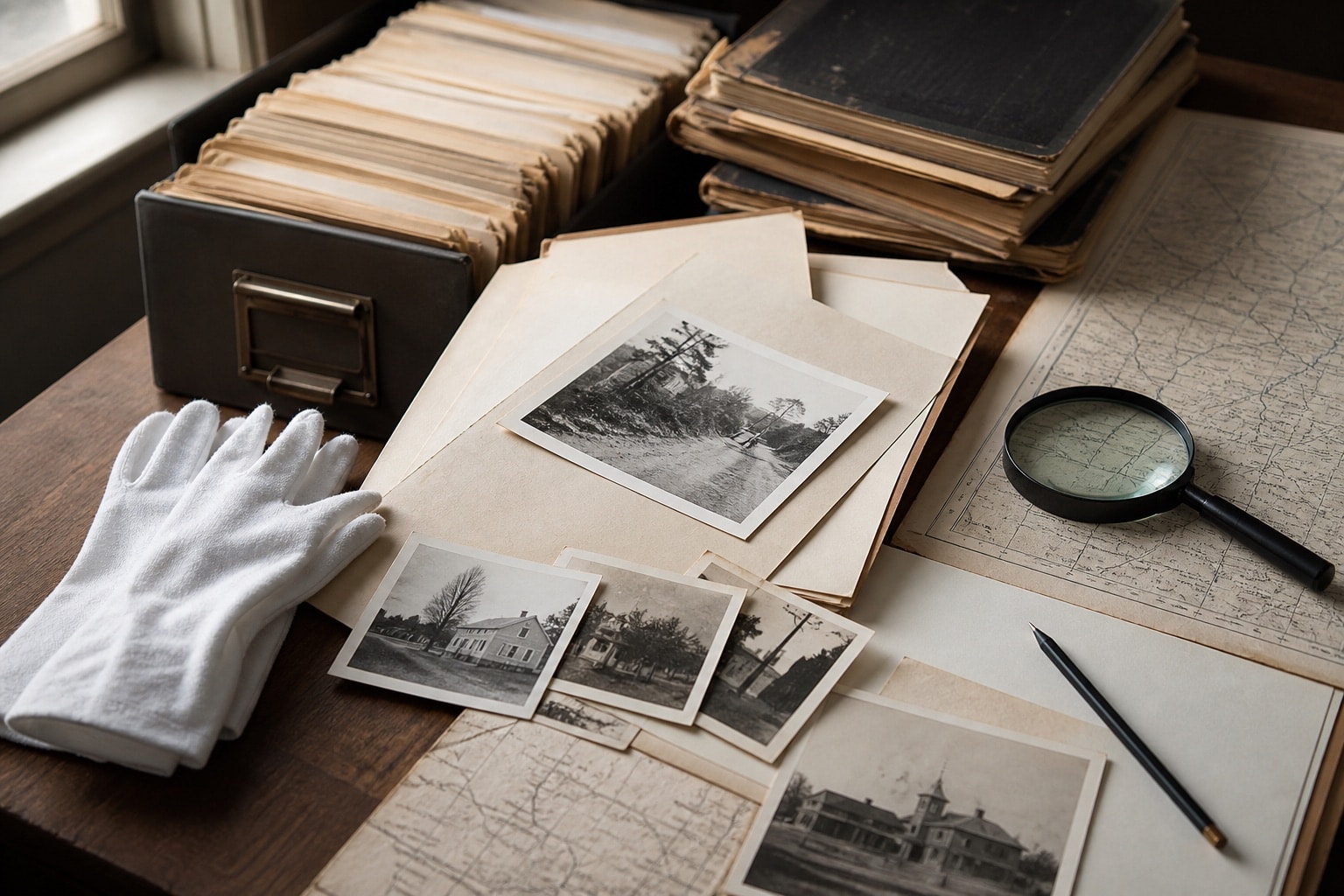
An object becomes useful for history when its context remains attached. A plain tool with reliable provenance may answer more questions than a spectacular object with no documented origin. Museum practice is the disciplined work of maintaining that connection while protecting physical material. This page discusses general methods only. It does not describe the current policies, holdings or condition of any real institution.
Documentation begins before interpretation
Accession records establish how and when an item entered a collection, the basis on which it was acquired and the restrictions that accompany it. Catalog records describe identity, material, dimensions, marks, condition, associated people and location. Good records distinguish donor statements from verified facts. They preserve previous identifications even when later research changes the preferred description, allowing future staff to understand how knowledge developed.
Photography supports documentation but does not replace it. Overall views, details, scale and marks serve different needs. Filenames should connect to a stable object number rather than a person’s temporary folder. Location control matters just as much: an item removed for photography, research or exhibit must be traceable. Small failures in location updates can turn preservation into loss.
Preventive care comes first
Conservation is often imagined as dramatic repair, yet much collection care is preventive. Stable storage, careful handling, appropriate supports, housekeeping and environmental awareness reduce damage before treatment is necessary. Different materials respond differently to light, moisture, pollutants and pests. A composite object may contain wood, iron, leather and paint, each with competing needs.
The National Museum of American History collections-care overview explains why museums rotate sensitive objects and manage light exposure. Removing an item from display is not evidence that it has become unimportant. It may be the action that lets future visitors encounter it. The Museum Conservation Institute resource list provides broader professional references.
Exhibits are arguments
An exhibit selects objects, arranges sequence and directs attention. Even a neutral-looking case makes an argument about what belongs together and what deserves emphasis. Labels should identify the evidence behind a claim and avoid speaking more confidently than the record permits. A phrase such as “believed to have been used” can be precise rather than weak when provenance is incomplete.
Context prevents nostalgia from becoming the only frame. A school desk can open discussion of education policy and childhood. A forged fitting can lead to repair economies and skilled labor. A farm implement can reveal credit, soil and mechanization. A kettle can introduce food safety, volunteer labor and civic tradition. The object remains central, but it acts as a doorway rather than a decorative endpoint.
Ethics and sensitive description
Museum records can contain personal and community information that should not be published simply because it is available. Recent medical, educational, crisis, grief and child-related records require careful restriction. Human remains and culturally sensitive objects demand consultation and legal as well as ethical responsibilities. Descriptions written decades ago may contain harmful or outdated language; repositories often preserve the historic record while adding current context.
Authority is also distributed. Community knowledge, maker expertise and descendant perspectives can correct catalog assumptions. Consultation should not be treated as a request for free endorsement. Museums need transparent goals, consent and credit. When views differ, documentation can preserve the range rather than forcing false unanimity.
Digital access is not frictionless
Digitization improves discovery but creates new responsibilities: file preservation, rights review, descriptive quality and long-term storage. A scan without metadata becomes an orphan, and a website copy without migration planning can vanish. Where a cited document is unavailable, the responsible choice is to direct readers to a research guide rather than imitate it.
Digital presentation should label generated imagery and distinguish archival reproduction from illustration. That distinction preserves the difference between atmosphere and evidence.
Stewardship is the practice of keeping an object, its condition, its source and the limits of current knowledge in view at the same time.
A useful object record
For a basic study note, record an identifier, object name, dimensions, materials, construction, inscriptions, condition, provenance source, associated dates, photograph references and open questions. Avoid publishing private addresses or live contact details. Cite the catalog or repository responsible for a comparison. If an identification changes, retain the reason and date of the revision.
These habits strengthen every subject in the guide. They keep the forge from becoming theater alone, the schoolroom from becoming generalized childhood, and farm tools from becoming anonymous decoration. Museum practice is where compelling story and accountable evidence learn to coexist.
Professional boundary: This page is educational and cannot diagnose an object’s condition or prescribe treatment. Fragile or valuable material should be assessed by an appropriately qualified professional.